
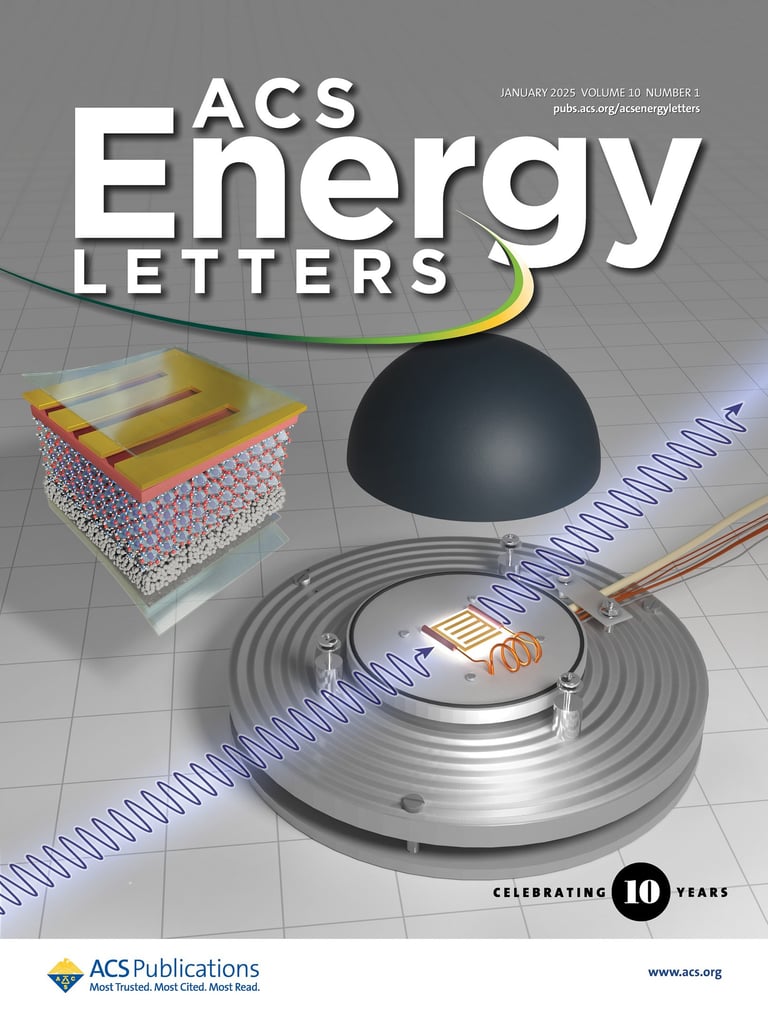
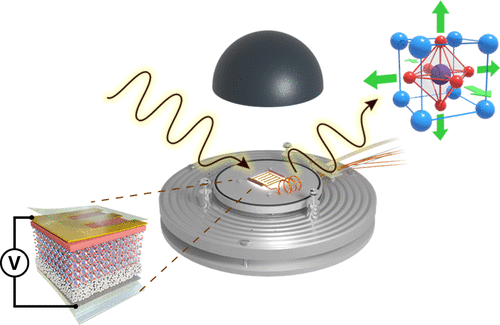
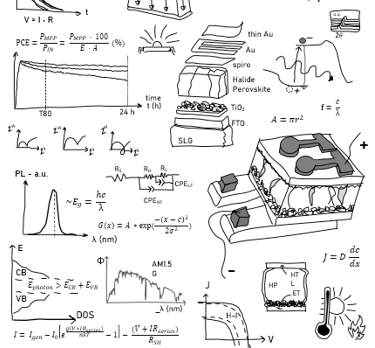
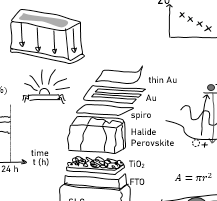
The long time for evaluation of perovskite solar cells and the need for development of methods to understand solar cell degradation under voltage bias and illumination effects (excess carriers), led us to design an accelerated stress test with a large forward bias voltage during acquisition of X-ray diffraction by using a specialised setup and a re-designed top electrode.
Read the complete article by clicking on any of the images, thank you ACS Energy Letters for featuring us on the cover of the 10 year celebration issue and for everyone part of the work
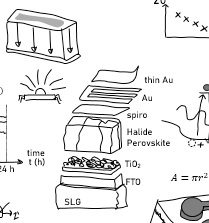
An excellent overview of PSC degradation under different combinations of stressors!
In-situ, how and what? During my first 2 years of my PhD we worked intensely on this extensive literature review. We collected published works until 2022 that included characterisation of properties of perovskite solar cells (PSCs) DURING degradation studies, not only including the performance of the cells, and without removing the solar cells from the conditions that are provoking changes in the materials of the cell. I am delighted by all the positive feedback we have received, including 3 international awards.
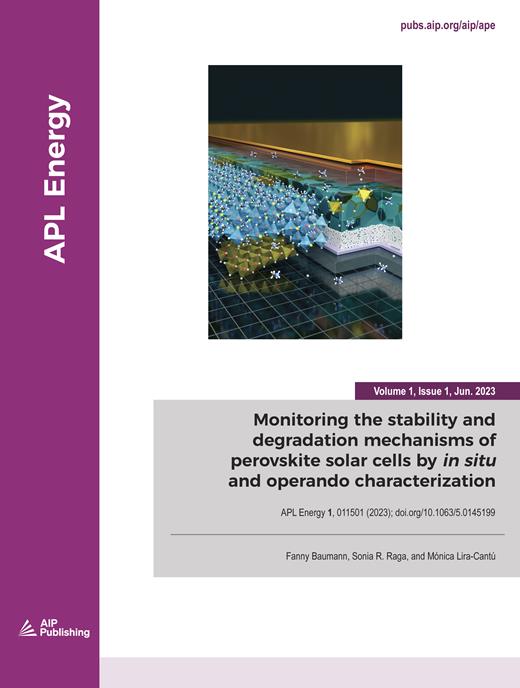
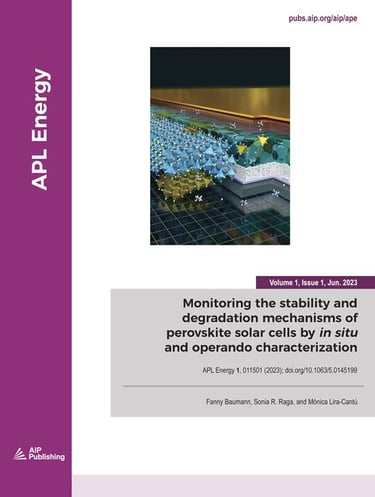
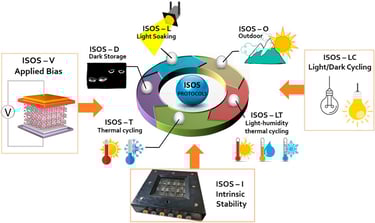
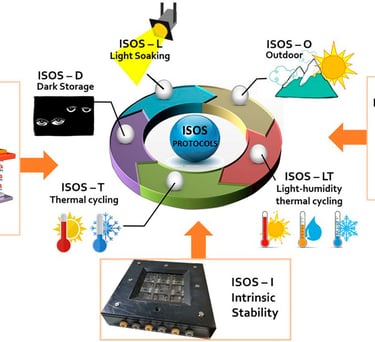
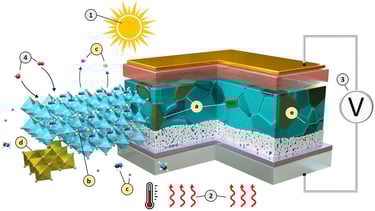
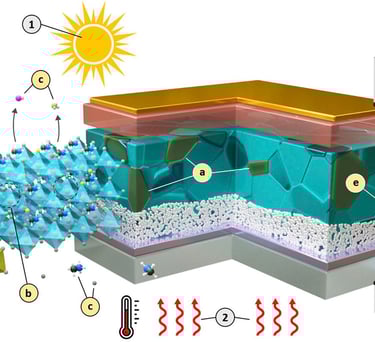
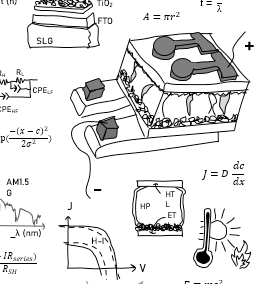
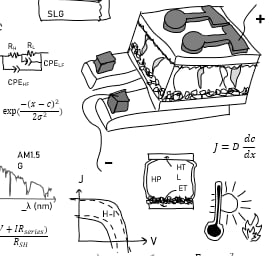
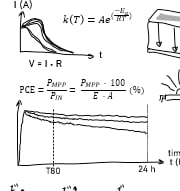
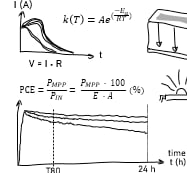
Thank you APL Energy for the lovely feature in the first ever issue of the journal! Please click on any image to reach the article
Multimodal in-situ and ISOS parallell testing at high temperature and illumination
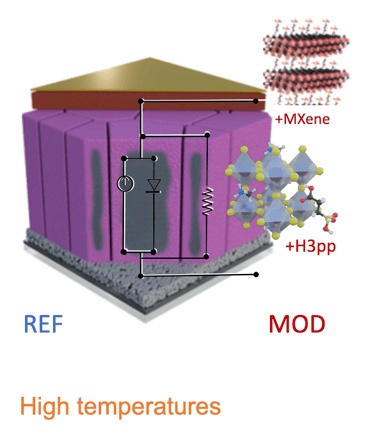
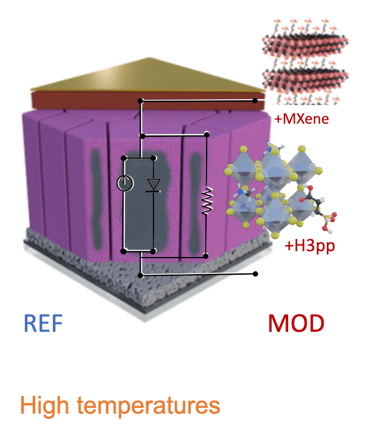
At this point during my PhD thesis there simply was no capacity to make an equally appealing cover as for the other two articles, but with that said, I am if not the most proud of the experiments conducted with XRD during this work.
With help from the technical team and the experiences we had gained, we were able to perform truly pioneering experiments regarding the sophistication of data collection during 1 sun illumination and 85 °C, taking all stressors well into account. I believe this type of testing can serve as an inspiration for industrial application of in-situ characterisation.
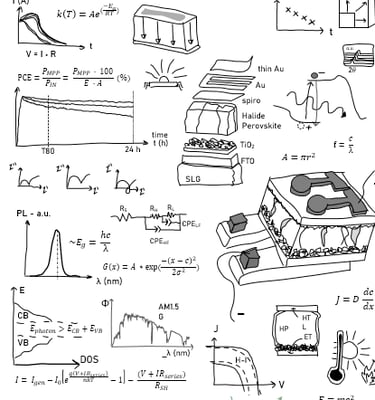
PhD thesis
In-Situ Multimodal Analysis of Strain Evolution in Perovskite Solar Cells during Stability Assessment
★★★★★
(EXTRACTED ABSTRACT): The transition to renewable energy sources could be the most pressing technological challenge of our time, as the high demand and use of fossil fuels cause overpopulated transportation channels, contamination, global warming, and unintentionally fund wars. In resolve of the global energy crisis, photovoltaics is an elegant solution to a non-exhaustive source of energy, the sun. With solar generated electricity, the need for an extensive grid could be reduced, and a solar panel is only producing costs (apart from area and/or cleaning) and waste at the start and end of its life. Perovskite Solar Cells (PSCs) show promise for flexible, cheap and lightweight photovoltaics. These tuneable photovoltaic devices could revolutionize off-grid power supply and can bring the technology to places and applications previously not possible. Stability guarantee is the main hurdle that stands in the way of PSC comercialization. With many potential instability-phenomena, both reversible and irreversible, the PSC performance decreases over time or fails suddenly, thus further understanding is needed. Detection of initial instability under any unavoidable stressors that PSCs need to endure will be more important in ever more durable PSCs. The studies in this thesis aim to develop characterization procedures that lead to greater understanding of the PSC system under operation in regards to physical and chemical processes. Several in-situ operational stability tests were performed using X-ray diffraction (XRD), photoluminescence (PL) and electrochemical impedance spectroscopy (EIS). Comparison studies with PSCs using stability-enhancing modifications such as perovskite precursor additive engineering and interfacial layers led to discoveries of both degradation phenomena and actuation of the additives. In general, the thesis work demonstrated advantages with in-situ methods towards understanding reversible and irreversible decline in PSC by revealing several degradation phenomena, specifically related to strain-provoked breakdown. Findings include lattice expansion by excess carrier conditions and their relation to interfacial ionic barrier formation, interfacial strain during thermal expansion, and the relation of grain surface decomposition with ion conductivity at elevated temperatures. The conclusions of this work regarding the efficacy and limitations of phosphonate additives and MXene interlayers to stabilize PSC set a roadmap for further stability-enhancing efforts and evaluations. The principal take-home messages from this thesis are the added value provided by in-situ characterization during stability analysis, the relation of strain to reversible and irreversible degradation phenomena in PSCs, and additive engineering strategies to enhance PSC lifetimes.
cum laude
Directed by Prof. Monica Lira Cantu and Dr Sonia Ruiz Raga
Links to other published works
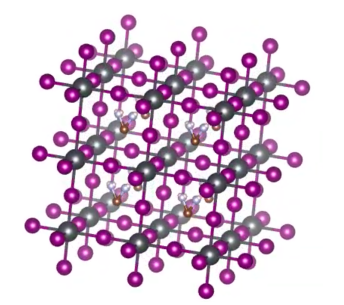
The Perovskite Database project
Roadmap towards comercialization of PSCs
EIS analyses at various points of degradation of PSCs
Master thesis: Sn-Pb-mixtures for Perovskite Solar Cells
Push the images to open the links
Let's make the future better together
Empowering your journey through nature and science.
LET'S CATCH THE NEXT SHIFT
Connect
+46739039368
© Fanny Baumann 2025. Please see the linked articles for contributing funding and supporting agencies.
fannyb@live.se